
Intensive Course on Congenital Muscular Torticollis
2nd Edition
We give you a clear, step-by-step strategy that allows you to intervene effectively, from assessment and treatment to family education.
Learn to intervene with confidence, sound clinical judgment, and tangible results from day one.
This course is for you if you work with babies and have ever wondered how to treat torticollis without feeling like you are improvising.
€314 / US$357 · Choose your preferred currency
The problem:
Many professionals treat congenital muscular torticollis without a clear strategy. This leads to longer treatment processes, frustration for families, and slow progress.
This course changes that: it gives you a structured, practical system that improves the baby’s progress from the very first sessions.
Become an expert clinician in the treatment of babies with this specialist course
Torticollis PRO
A specialized two-month course.
However, you can complete it at your own pace, as it is designed to fit around your schedule.
You will have lifetime access.
Updated Online Format
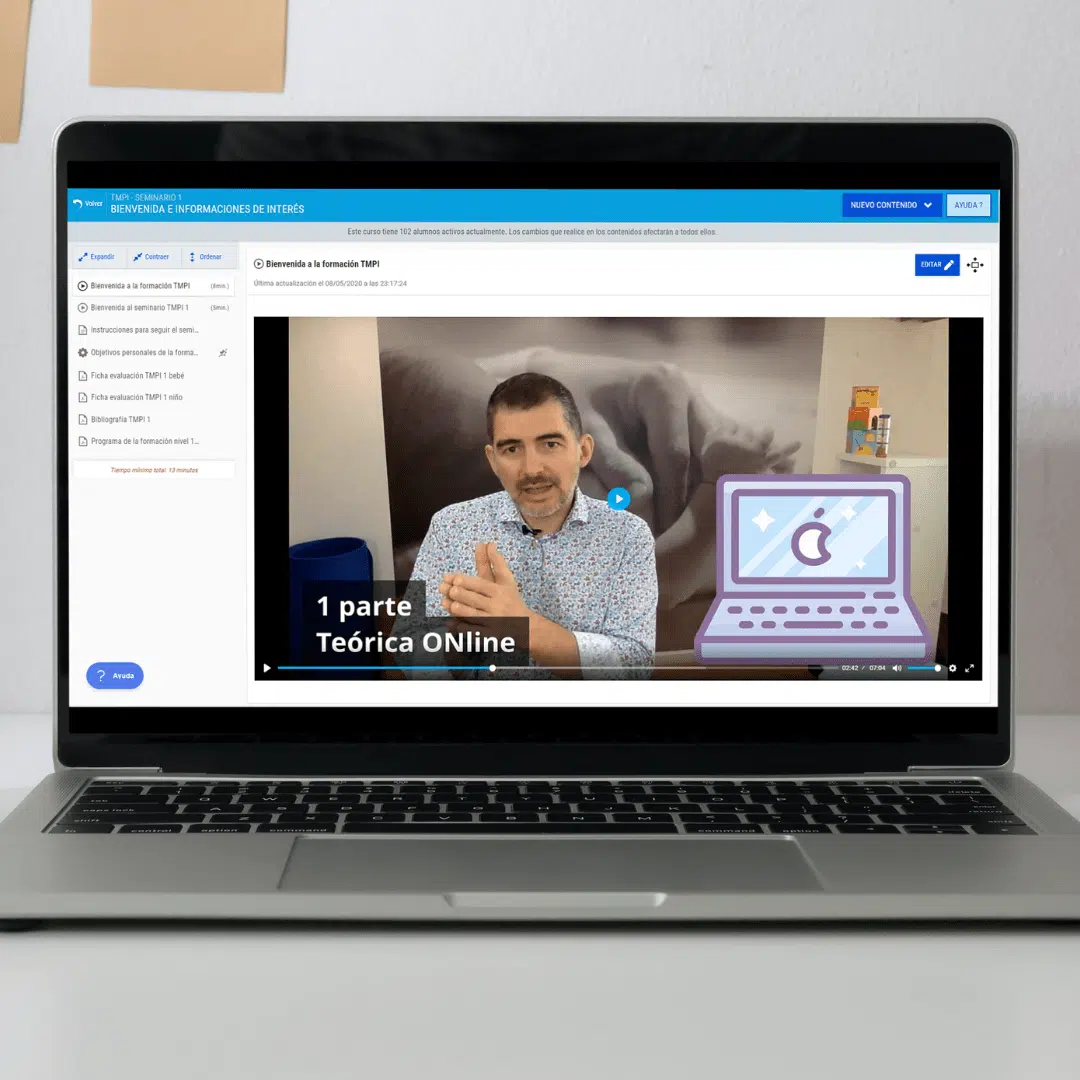
This is a 100% online course. You will have your own personal area where you can access all the videos, modules, and learning materials.
In addition, Torticollis EXPERT is updated regularly to ensure that the intervention strategies remain high-quality and effective.
Guidance and Support
You will periodically have access to webinars for questions and clinical cases.
The sessions will be recorded and uploaded to the platform so that you can access even more material.
More than 500 clinicians trained during the 1st edition
Content included in some of Europe’s leading Master’s programs in pediatric physiotherapy
Find out whether Torticollis EXPERT is right for you
Physiotherapists, kinesiologists, and experienced pediatric professionals
You are an experienced professional, but you want better outcomes and stronger clinical reasoning skills.
Even though you already use many techniques, you feel that you lack a clear structure: a model that helps you think logically, connect symptoms with their underlying causes, and make confident decisions without depending on rigid protocols or intuition alone.
You want to stop improvising, understand your work more deeply, and feel confident that every intervention has a clear purpose.
Professionals who want to enter the field of pediatrics
You do not have extensive experience yet, but you are highly motivated to enter this fascinating area of pediatric care.
You are curious, eager to learn, and genuinely interested in helping young children through a professional, evidence-informed approach.
You are looking for clear training that teaches you how to observe, reason, and act with sound clinical judgment from the very beginning, without getting lost in scattered information. This will help you build a safe, coherent practice with a meaningful impact on children’s lives.
Professionals committed to giving babies and families their best
You are not satisfied with basic information. You know that you can achieve better results in less time.
That is why you are looking for a deeper, more structured approach that helps you better understand what you do, use clinical reasoning, and achieve meaningful improvements without relying on generic prescriptions.
You want to understand exactly why you do what you do in each individual case and make a real difference in the lives of your patients and their families.
Become an expert clinician in the treatment of babies with this specialist course
Iñaki Pastor and the international PIMT team have developed four essential pillars designed to support better clinical outcomes
Improve your results with clearer and more accurate clinical reasoning for cervical conditions in babies
Your results do not depend solely on how many times you stretch the sternocleidomastoid muscle, or even on how often the baby is treated by a physiotherapist
The key is understanding and analyzing how the baby’s neck functions so that you can recognize the type of torticollis and identify whether musculoskeletal or motor-control factors are involved. You must also be able to quickly recognize red flags that require caution
With Torticollis EXPERT, you will gain new skills and techniques to achieve faster and longer-lasting results
Assess in detail
A precise history-taking process and an organized system of clinical tests to understand the baby’s functioning:
neurodevelopment,
cervical function,
visual function,
orofacial function,
motor function.
Analyze with clarity
A clear system for organizing clinical data, supported by strong and straightforward clinical reasoning.
A well-structured plan for your work both in the clinic and at home.
Intervene directly with the baby
Comfortable, precise, and above all safe manual therapy to improve passive mobility.
Stimulation and retraining techniques to improve active mobility and the baby’s overall functioning.
Organize the environment
Clear and effective recommendations for the family.
Educational materials that can be provided to caregivers.
Well-structured exercises for home practice and guidance on environmental factors that may support or hinder your results.
Discover safe and effective treatment techniques
We teach you the two types of intervention that make a meaningful difference in congenital muscular torticollis.
Phase #1: Pediatric manual therapy
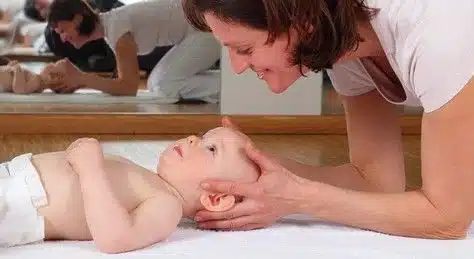
Manual treatment of the tissues, muscles, and neuromeningeal tension is essential for improving passive mobility. We provide a range of techniques to release the tissues, improve innervation, and improve joint movement.
Stretching, the typical approach, is reviewed and updated. We also offer several other techniques that are more comfortable and often more effective for improving the range of motion the baby needs.
The goal is not to make the baby suffer in order to improve mobility.

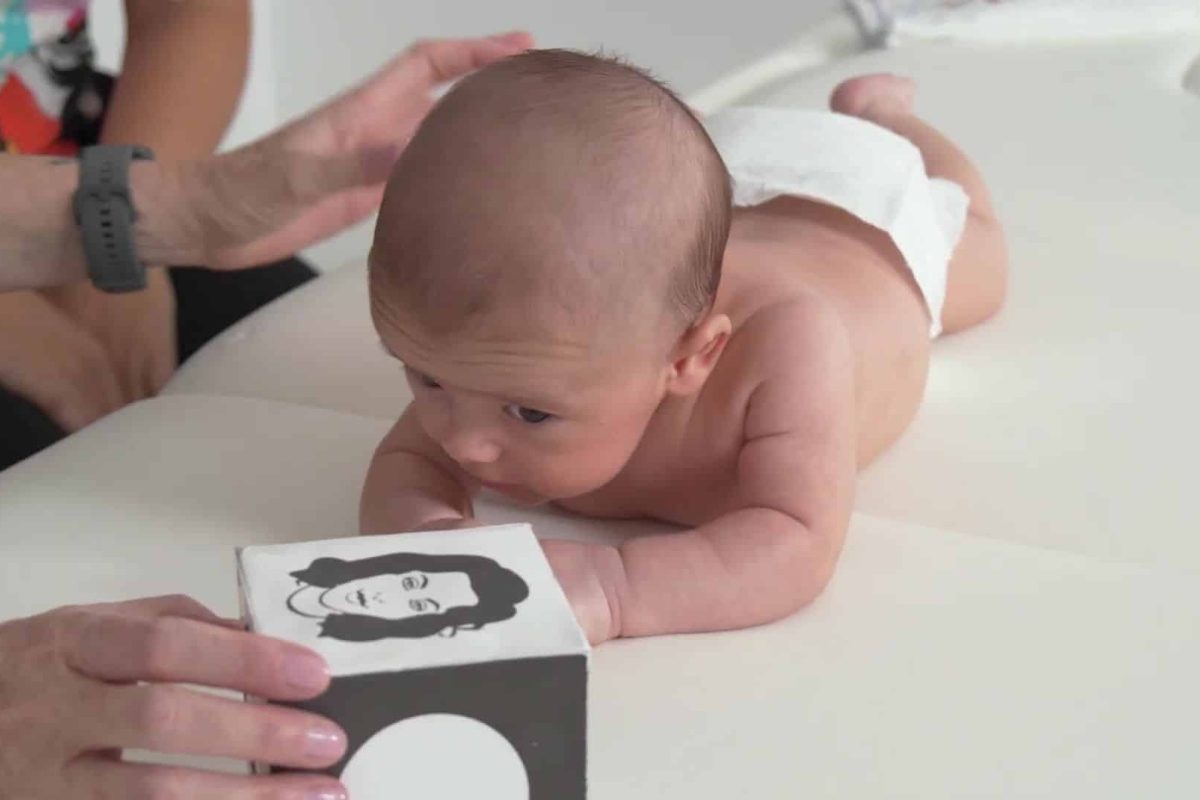
Phase #2: Exercises and retraining
We include targeted techniques for treating head tilt, which is often the most difficult and treatment-resistant aspect.
We provide a wide range of active mobility stimulation techniques, along with retraining exercises to improve cervical alignment when the baby is upright or placed prone.
The course also includes vestibular stimulation exercises that are essential for the baby’s neurodevelopment and muscle tone.
Physiotherapists and kinesiologists are already becoming TORTICOLLIS EXPERTS
This is what clinicians from the first edition achieved.
“Do not hesitate: it is absolutely worth it. This course supports you throughout the entire process.”
“Today, I apply all the clinical reasoning from the course in my practice. It changed the way I assess and treat patients.”
“This course gives you a new perspective and better results. If you are looking for something more from your treatments, you will find it here.”
“This course made a huge difference in my practice: I understood torticollis beyond what I thought I already knew.”
“It combines theory and clinical practice impeccably, with real cases and practical strategies.”
15 years of results and research on congenital muscular torticollis
The treatment system you will learn in Torticollis EXPERT has been tested by hundreds of professionals across 15 countries
Training included in university Master’s programs in pediatric physiotherapy
You will gain access to knowledge taught in leading Master’s programs

Scientific evidence
Training supported by up-to-date references aligned with international clinical guidelines
Continuous updates
New material is added periodically, and references are regularly updated
15 years of results and research on congenital muscular torticollis
This is not simply another course where you passively watch videos on a screen. It is an online training program designed specifically for active professionals with real clinical practice who want to apply what they learn from day one.
The learning experience is active, practical, and designed to help you reason more clearly, intervene more confidently, and make meaningful clinical decisions.All the content is adapted to the situations you encounter in clinical practice, without filler theory or empty protocols.
Key 1. Take a thorough clinical history
• Why clinical history-taking guides the treatment process and saves time during the first appointment.
• Preliminary questionnaire: what to ask and how to submit it, including prenatal, perinatal, and postnatal history, breastfeeding or feeding, previous treatment, and the baby’s environment.
• Turn family concerns into functional, observable, short-term goals.
• Onset and progression: key questions for differential diagnosis.
• Fears, beliefs, and expectations: how to identify them and encourage adherence.
• Initial working hypothesis: five or six plausible causes, a mental framework for assessment, and red flags requiring referral.
Key 2. Assess neurodevelopment in detail
• Why congenital muscular torticollis may present risks to neurodevelopment and when structured screening is required.
• A six-step protocol: vision, hearing and communication, automatic responses and reflexes, postural-motor development, standardized scales, and environmental factors.
• Vision and hearing: fixation, tracking, facial expression, response to sound, asymmetries, and warning signs.
• Automatic responses, reflexes, and postural-motor development: quality of movement, milestones by age, use of the arms and hands, and detection of asymmetries.
• Standardized scales such as AIMS, HINE/SINDA, TIMP, IMP, Bayley, and Denver II: practical criteria for choosing the appropriate tool for each case.
• Environmental factors that affect outcomes and adherence, family education, and red flags requiring referral.
Key 3. Perform a thorough examination of functions and structures
• The importance of a detailed assessment of functions and structures to confirm diagnostic hypotheses and distinguish functional conditions from structural conditions.
• Active mobility: observation of spontaneous head rotation, visual, auditory, and tactile stimulation, and objective measurement in degrees.
• Passive mobility: cervical reference ranges, detection of barriers and resistance, and differentiation between structural limitations and functional deficits.
• Alignment: analysis in supine and prone positions, classic postural reactions such as pull-to-sit, Landau, and the Muscle Function Scale, and detection of compensations and asymmetries with neuromotor implications.
• Tissues: observation and palpation of the cervical region, detection of nodules in the sternocleidomastoid muscle, associated tension, signs suggesting malformations, and referral criteria.
• Neuromeningeal tension: clinical signs such as extension patterns, irritability, and rigidity; baby-adapted tests such as the egg test and modified Landau; clinical applications and relationship with meningitis.
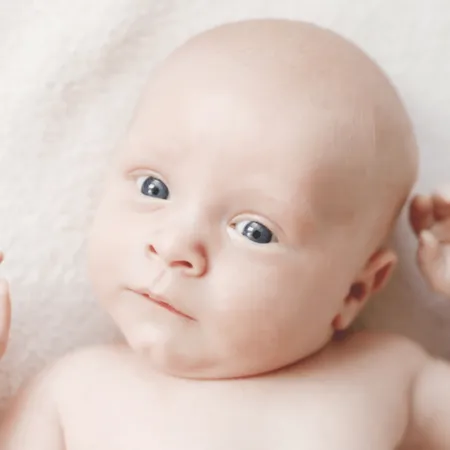
• Skull shape: assessment of plagiocephaly and brachycephaly using observation, cephalometric measurements, cranial indices, digital tools, the Argenta classification, and referral criteria.
• Oral function: resting posture, facial symmetry, oral reflexes, tongue tone, and sucking; impact on breastfeeding and the need for interdisciplinary referral.
• Pain: the importance of recognizing pain in babies with torticollis, the use of validated tools such as FLACC and NIPS, interpretation criteria, and clinical follow-up.
Key 4. Identify associated conditions
• Torticollis does not occur in isolation. It is often accompanied by associated conditions affecting the hips, arms, thorax, mouth, and skull.
• Hips: observation of the more restricted side, the Galeazzi test, asymmetrical opening test, and referral for imaging where required.
• Arms: detection of adduction, mobility assessment, abduction testing, and external rotation testing.
• Thorax: analysis of thoracic convexity at rest and during head rotation, with early identification of asymmetries.
• Mouth: assessment of resting position, facial symmetry, lateral tongue movement, rooting reflex, and non-nutritive sucking quality.
• Plagiocephaly: global analysis of skull shape, detection of flattening or asymmetry, measurement of circumference, length, width, and diagonals, cranial index calculations, and the use of digital tools such as HeadShape.
• Craniofacial conditions: the importance of identifying these early as part of screening for congenital muscular torticollis.
Key 5. Apply strong clinical reasoning and define the intervention plan
• The importance of clinical reasoning as the basis for designing an effective intervention plan.
• Confirm or rule out the initial hypothesis and review possible causes, including ocular conditions, Sandifer syndrome or reflux, congenital malformations, neurological conditions, joint dysfunctions, and abscesses.
• Understand the etiopathogenesis of congenital muscular torticollis: severity levels, prevalence, and theories of origin, including compartment syndrome, intrauterine changes, and perinatal positioning.
• Distinguish between musculoskeletal torticollis and motor-control torticollis.
• Musculoskeletal factors: restrictions or blocks, tissue or joint limitations, and the need for manual therapy.
• Motor-control factors: sensory, muscle-tone, or motor changes and the need for stimulation and exercises.
• Do not focus solely on the presence of a nodule in the sternocleidomastoid muscle. Torticollis exists on a continuum and is not limited to a palpable mass.
• Establish a progressive intervention plan:
• First, address the musculoskeletal component.
• Then address the neurosensory-motor component.
• Involve the family in the therapeutic process:
• Listen to and understand their concerns.
• Explain the plan using clear materials.
• Practice exercises together with caregivers.
• Prepare families for difficulties they may encounter at home.
Key 6. Use manual therapy with precision and care
• Manual therapy in pediatric care: clarify common misconceptions, review the IFOMPT definition, and apply key principles. Treatment must be comfortable, adapted, gentle, safe, and supportive.
• Intervention objectives: improve active and passive range of motion, improve movement quality and symmetry, optimize cranial symmetry and morphology, support respiratory and orofacial functions, and promote motor and sensory development.
• What must not be done: precautions for specific conditions such as KISS syndrome.
• Myofascial therapy and massage: tissue mobilization techniques involving the sternocleidomastoid muscle and cervical tissues, with mapping in the supine position.
• Stretching or mobilization: analyze the differences, combine rotation and tilt techniques, apply safety precautions for hard end-feel and injury risk, understand the limitations of passive range-of-motion gains, work on the tissues first, respect barriers, and use stimulation to encourage active movement.
• ATNR and hand-to-mouth coordination: use the cervical asymmetric tonic reflex and hand-eye-mouth coordination to integrate manual therapy with neurosensory development.
• Advanced PIMT techniques: occipital neuromeningeal techniques, plagiocephaly and cranial deformity approaches, and integration with orofacial physiotherapy.
Included courses and bonus materials at no additional cost
➕Downloadable family education leaflets on neurodevelopment and the prevention of plagiocephaly
➕Live clinical webinars to answer questions and review real cases
Format and access:
100% online course
Immediate access after enrollment
Can be completed over two months at a comfortable pace
More than 10 hours of clinical content
Downloadable material and updates included
Lifetime access
15 years of results and research on congenital muscular torticollis
3 months of HEADSHAPE PRO free
Your ally throughout every stage of clinical treatment.
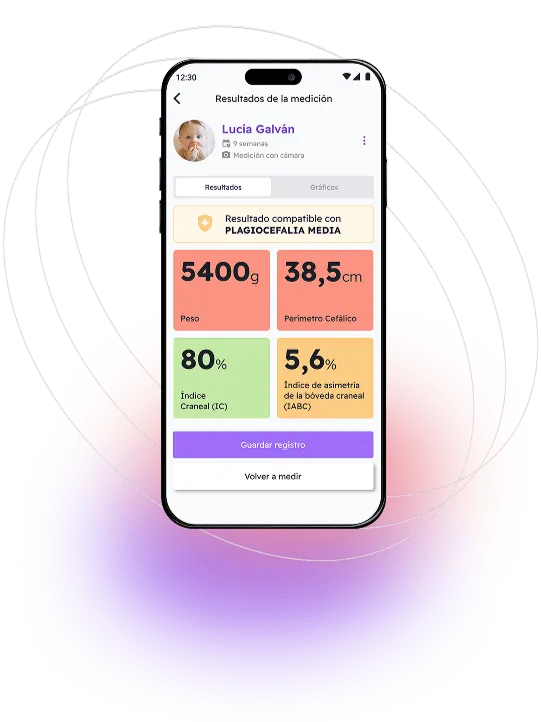
✅ Receive instant compatible results. Simply enter the measurements manually, and your assistant will provide the results.
✅ Track your patient’s progress at any time. Improve follow-up efficiency with an organized record of consecutive measurements.
✅ Receive guidance to support families. Patient progress is complemented by caregiver support. Discover your assistant’s tips.
✅ Use technology to make your work objective. Forget about using your phone calculator.
⭐ Automatic indices: Immediate calculation of the CVAI and CI.
⭐ Visual charts: Show parents the visual progress and build loyalty through real data.
Created by Iñaki Pastor and TMPI–PIMT
Develop your expertise with an internationally recognized specialist.

Doctor of Physiotherapy and Master’s degree holder in pediatric physiotherapy. Specialist in pediatrics and child development. International lecturer in various university Master’s programs in pediatric care and postgraduate professor at the University of Montreal in Canada.
With more than 30 years of clinical experience, he has trained thousands of professionals in Europe and Latin America.
Author of pediatric research papers and reviewer for scientific journals such as Children.
Author of books including:
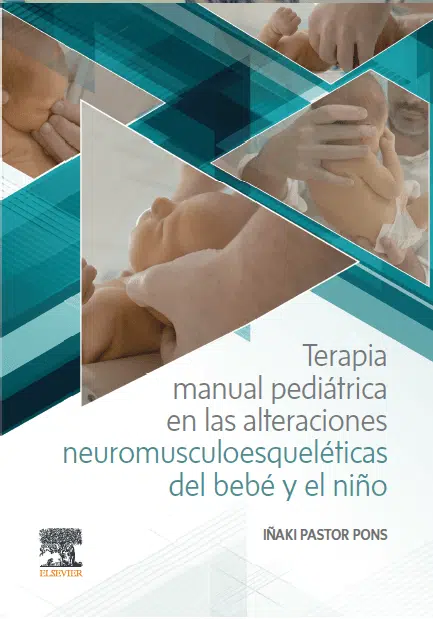
✅ Pediatric Manual Therapy for Neuromusculoskeletal Conditions in Babies and Children — Elsevier, 2023
✅ Neurodevelopmental Disorders — Elsevier, 2025
✅ Pediatric Orofacial and Breastfeeding Physiotherapy — Elsevier, 2026
PIMT is an internationally recognized approach due to its contributions to pediatric care and neurodevelopment.
It is used in more than 15 countries and continues to grow among physiotherapists and other healthcare professionals.
It stands out for its integration of respectful and safe pediatric manual therapy with motor and sensory neurodevelopment.
Certification
Upon completion, you will receive a diploma endorsed by the international PIMT model, including certified training hours.
Testimonials
Loading testimonials...
Frequently asked questions
What happens if I have no experience with torticollis?
Do not worry. The course guides you step by step, from the anatomical and clinical foundations to complete intervention.
Can I take the course if I am not a physiotherapist?
Yes. Although the course is designed for physiotherapists, it is also applicable to pediatricians and other child-development professionals.
Do I need to attend live classes?
No. All content is available from the moment you gain access. You can also join the webinars whenever you choose.
Does the course include real clinical cases?
Yes. You will watch videos of real assessment and treatment sessions.
Will I receive a certificate?
Yes. You will receive a certificate carrying the international PIMT seal.
Review everything included and get started today
Enrollment is simple, access is immediate, and you will begin seeing the results reflected in your patients from the very first application.

Intensive Course on Congenital Muscular Torticollis
✅ Complete program and step-by-step checklist
✅ Gradual two-month course release system
✅ Bonus: How to Help Families Follow Your Recommendations with Confidence and Without Doubts
✅ Bonus: Clinical Reasoning in Craniofacial Conditions in Babies and Children
✅ Bonus: 3 months of HEADSHAPE PRO free
For a limited time only!
⭐ Downloadable family education leaflets on neurodevelopment and the prevention of plagiocephaly
⭐ Lifetime access
⭐ Access to future updates
⭐ Mini clinical guides
⭐ More than 17 manual therapy techniques and exercises
⭐ Family education leaflets
⭐ Clinical history forms
⭐ Comprehensive course notes
€314 / US$357 · Choose your preferred currency


Important: Clinical Outcomes and Professional Responsibility
We want you to get the most out of this training and use it to grow as a professional. However, it is also important to make one thing clear from the outset: clinical outcomes cannot be guaranteed. Every case is unique, and patient progress depends on multiple factors, including medical history, environment, the specific way in which the strategies are applied, and, of course, the competence and clinical judgment of the professional providing the intervention.
This course provides tools, clinical reasoning frameworks, and practical strategies based on clinical experience and the available evidence. However, it does not replace individual professional responsibility or recognized official training required by the healthcare authorities in each country.
Participation in this course does not grant legal authorization to practice a healthcare profession, nor does it guarantee the development of complete clinical competence on its own. The application of the course content is the sole responsibility of the learner and must always comply with the legal and ethical framework governing their professional practice.
It is also essential for professionals to recognize warning signs or red flags that may indicate an underlying medical condition. If there is any concern, it is their responsibility to refer the patient immediately and urgently to the appropriate medical professional, always prioritizing the patient's safety and well-being.
To put it directly: this training gives you knowledge and helps you think more clearly. However, it cannot be held responsible for clinical errors, the incorrect application of the content, or a lack of results with your patients.
When you choose to train with us, we give you our best. We trust that you will do the same in your professional practice.